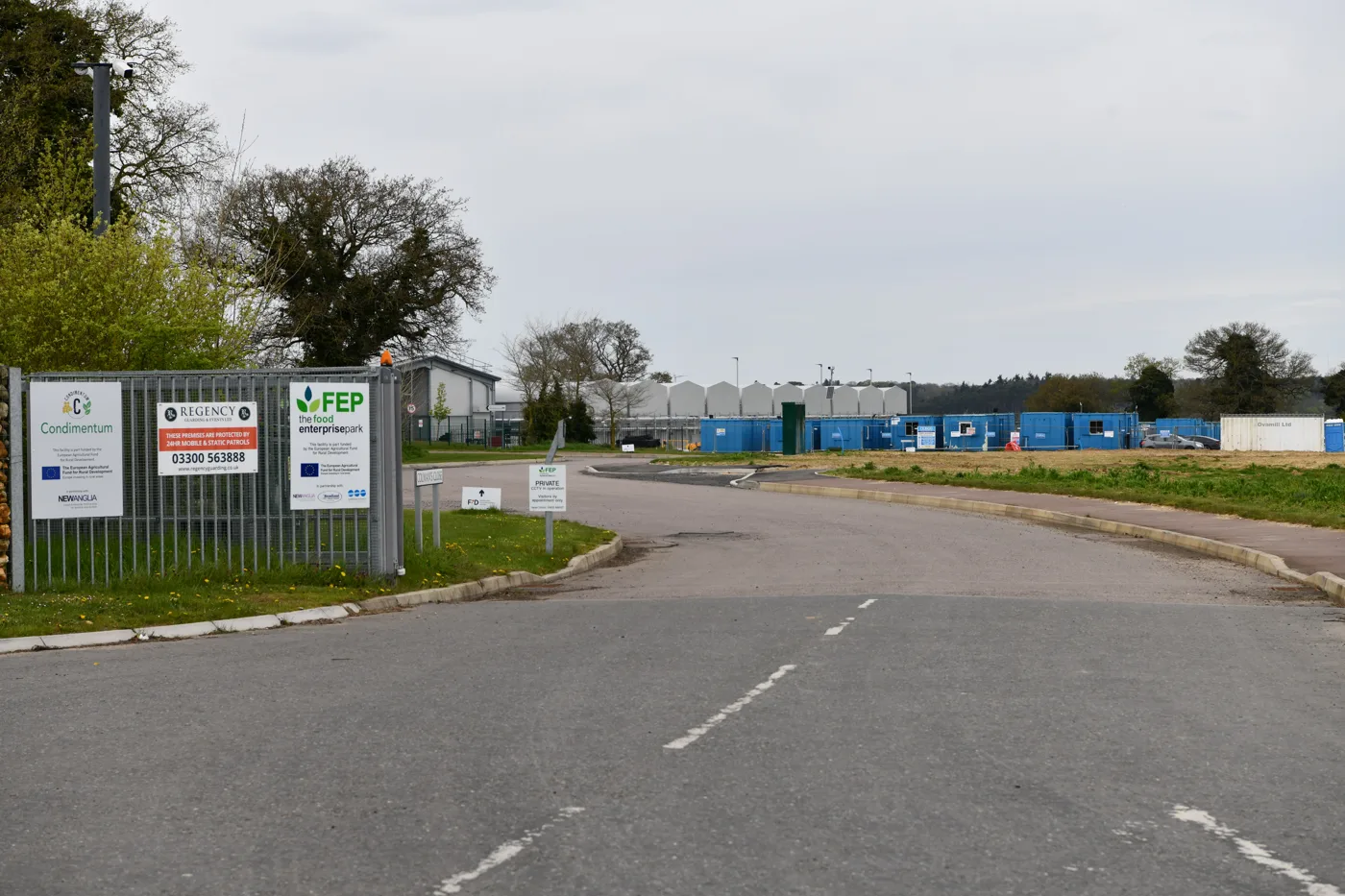

The £11.4m council-owned centre near Honingham covered its costs in 2025/26 with 11 of 13 units let. A large unit is due back on the market after an eviction.
The Broadland Food Innovation Centre paid its own way last year. The council-owned hub for food and drink businesses near Honingham broke even in 2025/26, its third full year, and 11 of its 13 units are now let.
The figures are in a review of the centre’s year by the council’s head of strategic asset management. It goes to Broadland District Council’s Overview and Scrutiny Committee at 6.30pm on Tuesday 22 September. Councillors are asked only to note it.
The report also confirms a change most tenants will already have felt. The council took over running the centre itself on 1 July 2026.
The numbers
The centre opened in September 2022 on the Food Enterprise Park. The council has put its cost at £11.4m. It has 13 food-grade units, a test kitchen, a sensory testing room and meeting space.
The review reports:
- Break-even in 2025/26, with a similar result expected in 2026/27
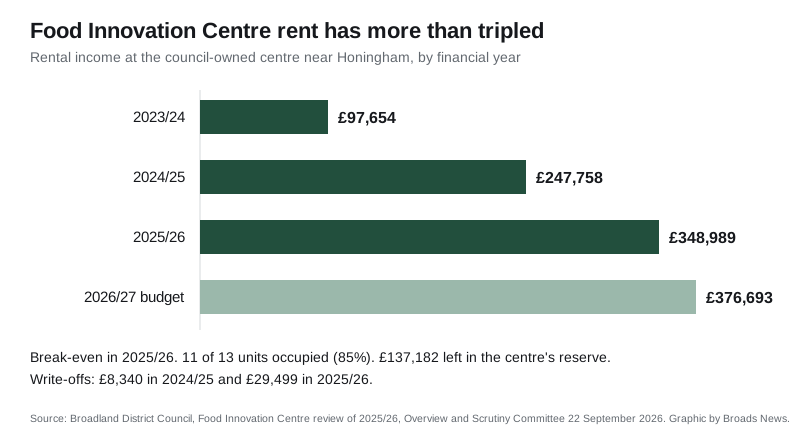
- 11 of 13 units occupied, which the council puts at 85%
- £348,989 in rent in 2025/26, up from £97,654 in 2023/24
- £376,693 of rent budgeted for 2026/27
- £137,182 left in the centre’s reserve as of July 2026
- £29,499 of write-offs in 2025/26, up from £8,340 the year before
The biggest running costs in 2025/26 were contracted services at £216,627 and electricity at £122,241. Electricity has more than doubled since 2023/24, when it cost £54,188.
Ahead of the business case
When the council decided to invest, its forecasts assumed 40% to 60% of units let in year one. That was to rise to 60% to 90% by the end of year two. The business case expected the centre to cover its running costs within five years of opening.
On those terms the centre is ahead. It has broken even in its third full year, and its occupancy sits near the top of the range.
The longer test is the council’s own money. The report says that at 60% occupancy, the council’s investment is forecast to be repaid by the end of year 30.
The centre has also beaten the output targets of its original funding programme. The report lists:
- 106 businesses supported, against a target of 90
- 118 businesses bringing out products new to them, against a target of 25
- 48 businesses launching products new to the market, against a target of 5
- 42 businesses working with research organisations, against a target of 40
An eviction, and no repair plan yet
Two units are empty. One is a small unit. The other is a large unit, which the report says is “expected to be ready for marketing by September 2026 following an eviction”. It does not name the tenant.
Two leases were renewed over the summer. Two businesses hold “virtual” tenancies, using the centre without a unit, and two more are due to start in September.
The report is candid about the building. “There is currently no capital works programme in place for the Centre,” it says. A stock condition survey is under way to plan maintenance. Building maintenance cost £40,942 in 2025/26, against £9,997 the year before.
Why the council took it back
Hethel Innovation managed the centre from the start. Its centre manager has now moved across to the council under TUPE rules, which protect staff when a service changes hands.
The council expects this to save about £30,000 in 2026/27. It says it will also be able to buy maintenance and compliance work differently. Because the first quarter still included payments to Hethel Innovation, 2027/28 will be the first full year of direct council management.
Hethel Innovation still provides innovation support to businesses. That is on a new 12-month contract which began in August 2026, with a break clause at six months. The report says tenancy support and marketing arrangements “remain to be agreed”.
On 15 September the council’s own page for the centre still described Hethel Innovation as managing it, and still sent unit enquiries to a Hethel Innovation email address.
Where any profit goes
The centre was built with money from the European Regional Development Fund and the New Anglia Local Enterprise Partnership, as well as the council. Both come with strings.
- Under the European funding, income must pay the centre’s running costs for 15 years. Any profit in that time may be clawed back in proportion to the grant.
- Under the enterprise partnership’s agreement, the council must hand over half of the net rent every quarter for 15 years once a re-investment period ends. Since the partnership was wound up, that money is owed to Suffolk County Council.
That is why the council moves each year’s surplus or deficit into a reserve set aside for the centre, to manage the ups and downs over the clawback period.
What it means for you
- If you run a food or drink business, a large unit is due to be marketed from September. The council’s page still lists info@hethelinnovation.co.uk for unit enquiries, so it is worth also contacting the council directly while the handover beds in.
- If you are a Broadland council tax payer, the centre is not currently costing the council money to run. Getting the council’s investment back is a much longer job: the business case forecasts repayment by year 30 at 60% occupancy.
- If you want to raise a question, the committee meets in public on 22 September. The council has also been offering grants to small Broadland businesses.
Sources
- Broadland Food Innovation Centre: Review of 2025/26, Overview and Scrutiny Committee, 22 September 2026, for the finances, occupancy, outputs, management change and funding conditions.
- Overview and Scrutiny Committee agenda, 22 September 2026, for the meeting date and time.
- Broadland Food Innovation Centre welcomes new tenants, South Norfolk and Broadland Councils, for the £11.4m cost and the September 2022 opening.
- Broadland Food Innovation Centre, South Norfolk and Broadland Councils, the council’s page for the centre as read on 15 September 2026.
Have your say